
Integrations and modernization
Your systems, connected to each other.
API integrations for online payments, credit, 1C, CRM and official services, wired to your site or platform, so data moves on its own, with no manual copying.
Integrations delivered: MAIB, IuteCredit, Microinvest, 1C, AMO CRM, Stripe, BNM and Donaris.
What do we connect? Five kinds of integration, each from a real project.
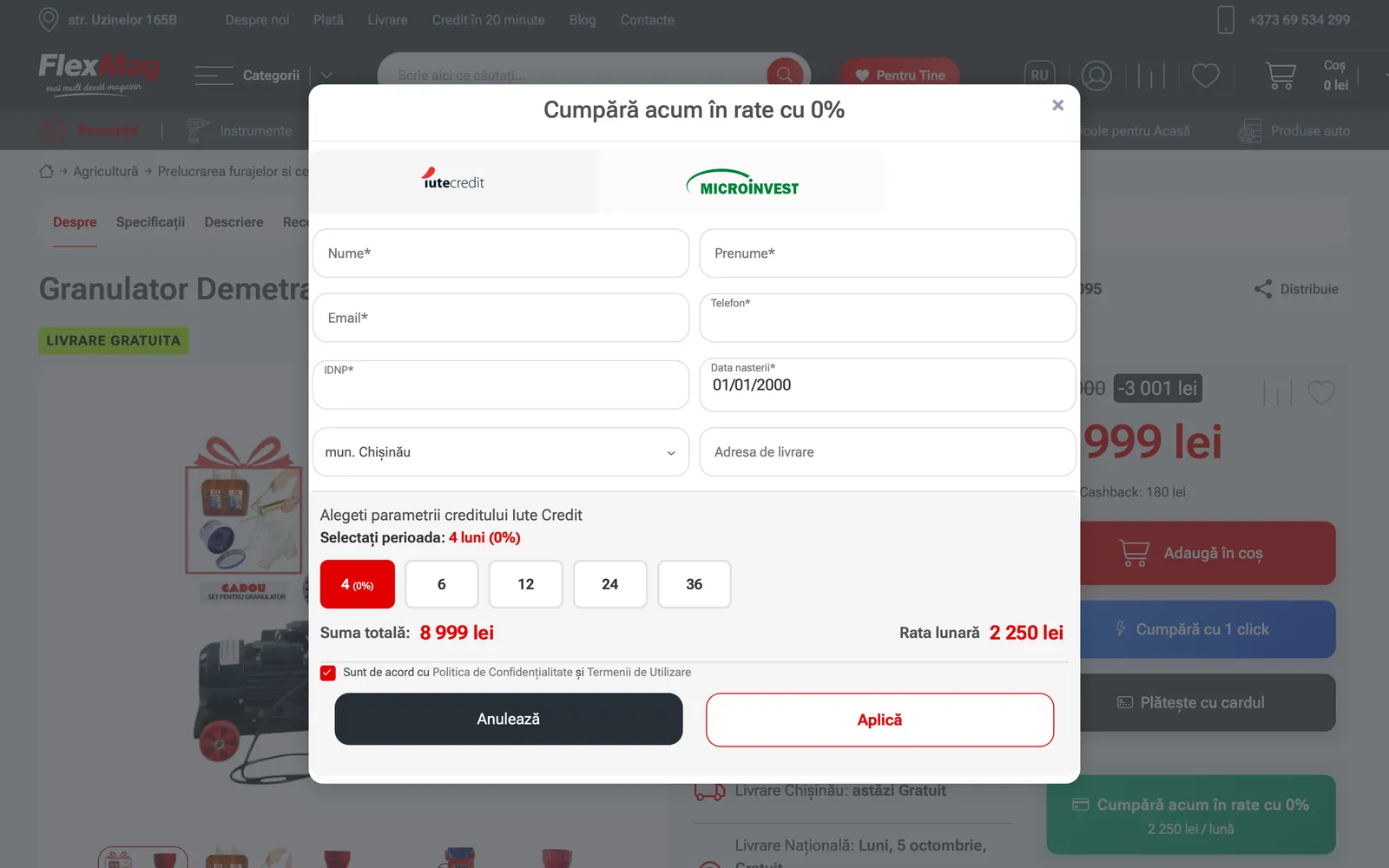
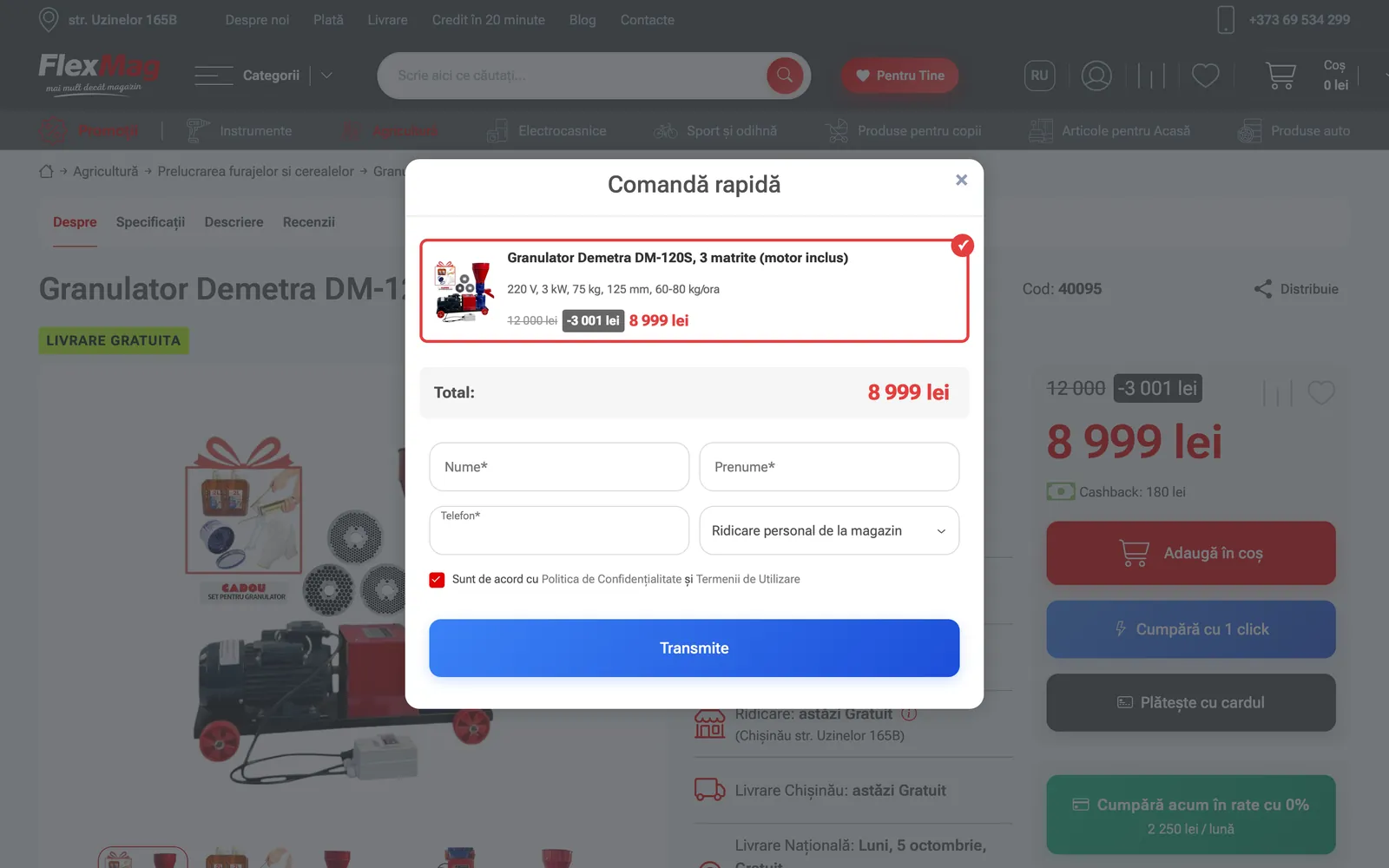
Card payment and credit applications right from the product page, with the confirmation landing in the order on its own.
Usually includes
- MAIB
- IuteCredit and Microinvest
- Stripe
Portfolio example
 FlexMagflexmag.md
Products, stock and sales sync automatically between the store and 1C, with no manual updates.
Usually includes
- 1C sync
- Stock and prices
- Sales back into 1C
Portfolio example
 Aviclimaaviclima.md
Orders, credit applications and questions reach the CRM and the sales team automatically, with their source.
Usually includes
- AMO CRM
- The source of every request
- Sales stages
Portfolio example
FlexMagflexmag.md
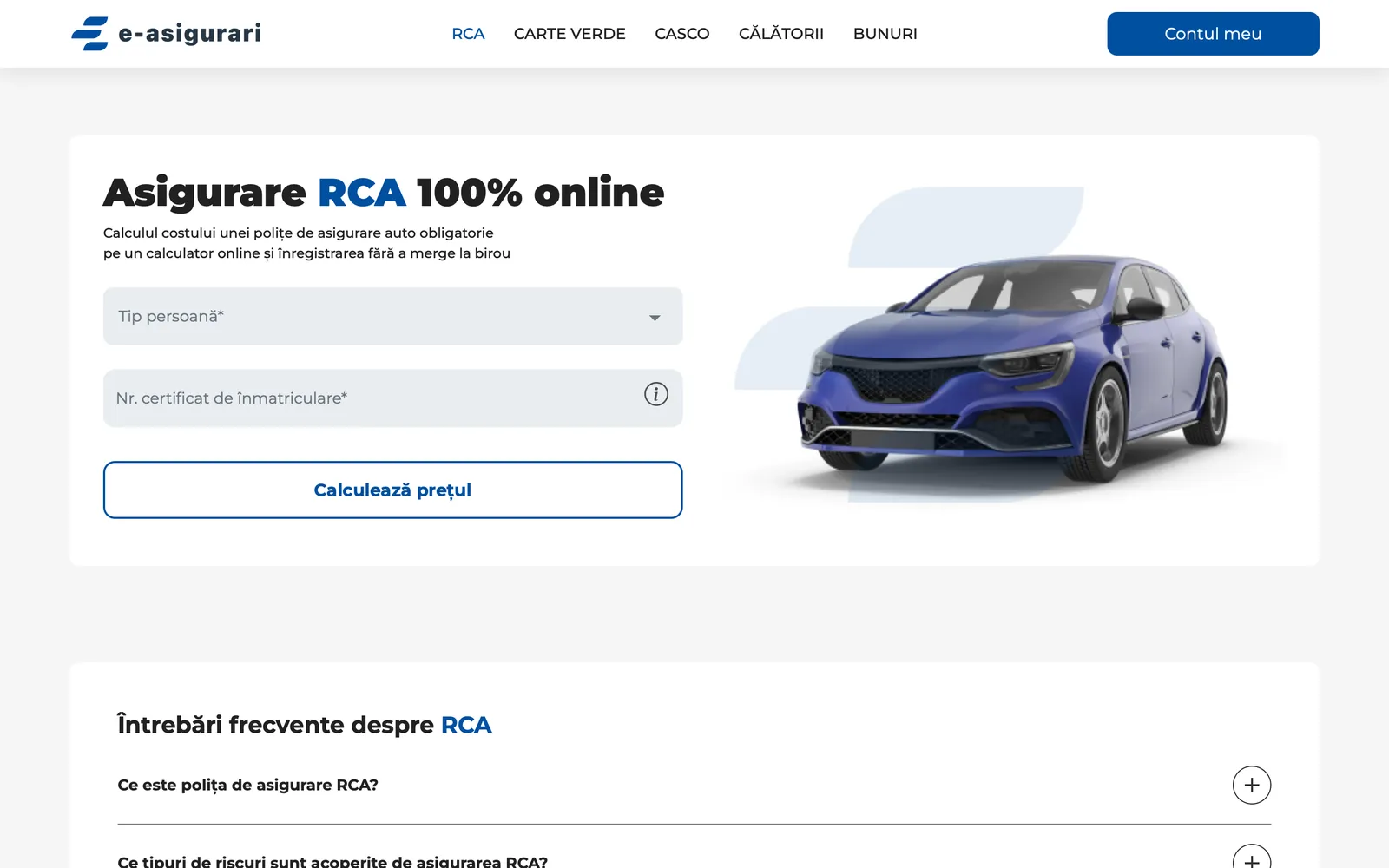
Data pulled in real time from official registers and services, for calculation, checks and payment, fully online.
Usually includes
- BNM
- Donaris
- MAIB payment
Portfolio example
 e-Asigurărie-asigurari.md
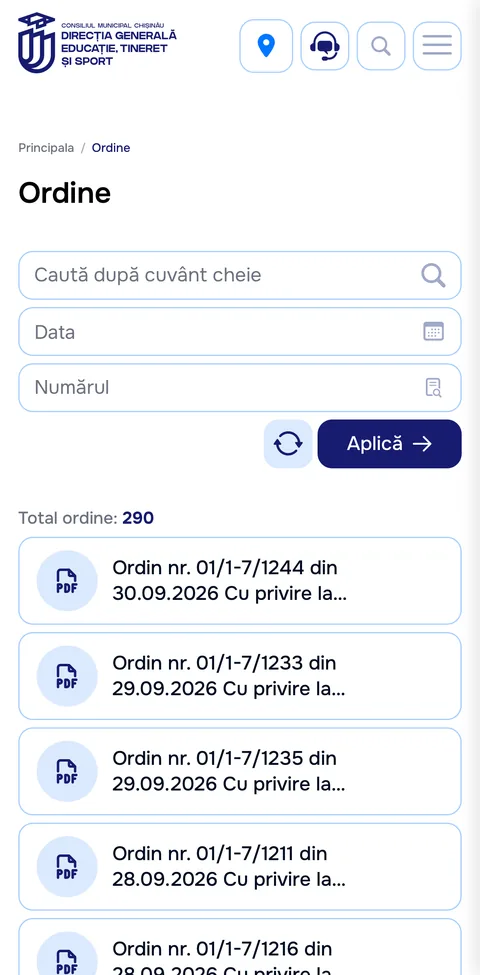
An old system becomes one your team can run: from a static site to documents with search, filters and an admin panel.
Usually includes
- Data migration
- Search and filters
- Admin panel
Portfolio example
 DGETSchisinauedu.dgets.md




What you get from an integration. Data that moves on its own and can be checked at any time.
-
Requests and orders in the CRM
Every request reaches the team with its source, with no manual copying.
-
Payments confirmed automatically
Payment, confirmation and order link up on their own.
-
Two-way sync with 1C
Stock comes from 1C, sales go back there.
-
A status for every operation
See where each request is, from sending to confirmation.
-
Controlled access
Each system gets only the access it needs.
-
Retries when a service doesn’t answer
Operations wait in a queue and are retried, and the team sees what didn’t go through.
-
Log and reports
What was synced, when, and with what result.
Featured case · Insurance
e-Asigurări: insurance bought fully online, with official data in real time.
The e-Asigurări platform lets people buy motor (RCA), Green Card and medical insurance fully online, without visiting a counter. Data comes in real time through official APIs (BNM, Donaris), and payment goes through MAIB. We also created the platform’s brand identity.
- MakeIT’s role
- Design, development and brand identity
- Integrations
- BNM, Donaris, MAIB
- Products
- Motor insurance, Green Card, medical insurance

Projects with integrations. Each with the systems we connected.
-
 Hipnosyahipnosya.comLogo, identity and an online store in three languages, with an AI assistant, card payments and an admin panel.See the project
-
FlexMagflexmag.mdUX/UI redesign, a cart that sells, payments and instalments, CRM and AI-written descriptions.See the project
-
 Magazinermagaziner.mdOur own product: compare prices across Moldova, with a public store rating and feeds for partners.See the project
-
 Hey Roger Smithheyrogersmith.comTwo websites for a US car hauling dispatcher, an in-house CRM connected to Telegram and Kommo, SEO and GEO: number 4 in AI answers in a month.See the project
-
 PLT Cargoplt.mdA new site, from scratch, with API tracking, an alert at every stage and a cost calculator.See the project
-
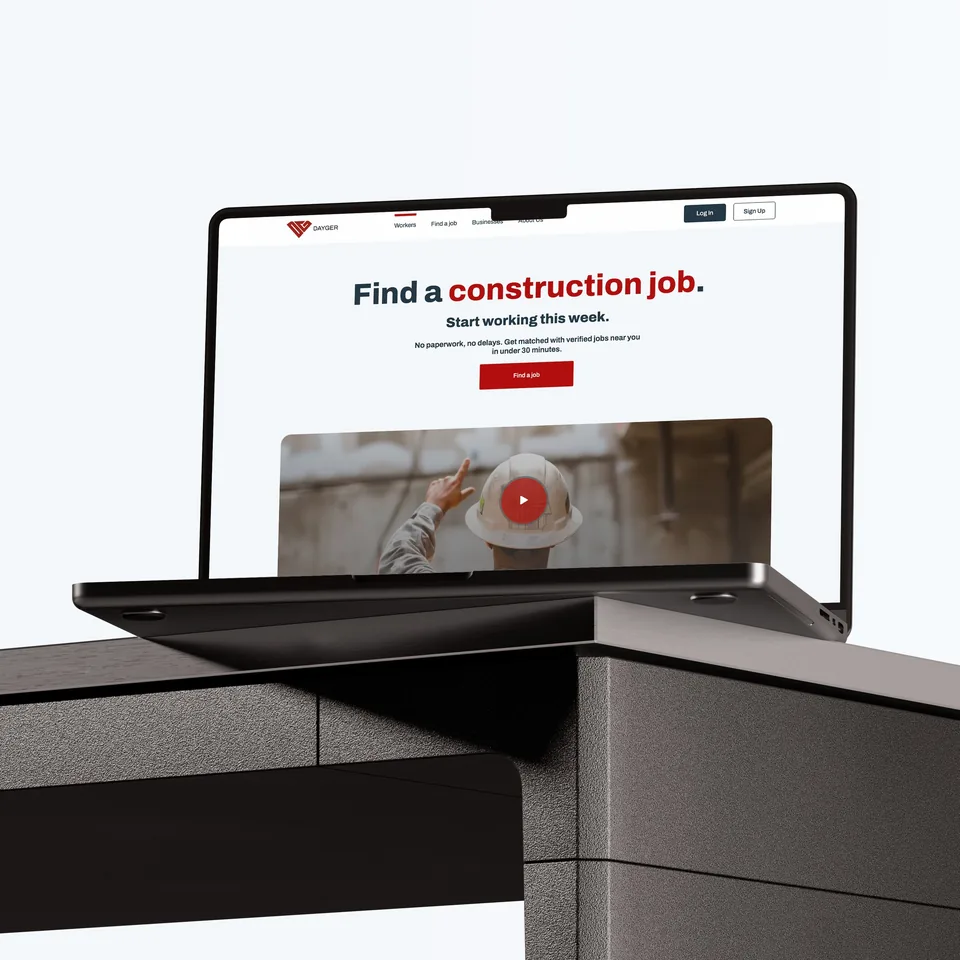 Daygerdayger.co.ukA UK construction recruitment platform: jobs with filters, a two-step application, an account with availability and PDF payslips, linked to the CRM.See the project
-
e-Asigurărie-asigurari.mdLogo, identity and the platform where motor, Green Card and other insurance are bought online, from a phone.See the project
-
 OATUCLoatucl.mdLogo and identity, the oatucl.md platform with a One-Stop Shop, and electronic registers with MPass and MSign.See the project
-
Aviclimaaviclima.mdAn online climate systems store: technical filters and comparison, the monthly instalment by the price, MAIB payments and stock integrated with 1C.See the project
-
 Dent Wolf Incdentwolf.comA website with interactive demos, a PDR school, a tool shop and ads that start by themselves when hail is reported.See the project
You always know where your project stands. Five stages, each ending in a result you see and approve.
01 / 05
Definition
Together we define what the product has to do, who it is for and what goes into the first version.
You getRequirements, flows and an estimateApproved by you
02 / 05
Design
We draw the screens and link them into a prototype you can try before a single line of code is written.
You getA clickable prototype and final screensApproved by you


03 / 05
Development
We build in short stages. Each version goes to a test environment, where you can see and try it.
You getWorking versions in a test environmentApproved by you
04 / 05
Launch
We launch, move the data over from the old system, train your team and hand over access.
You getA live product, training and access handed overApproved by you
- Tests
- Migration
- Training
- Access


05 / 05
Ongoing development
After launch we monitor how the product runs and improve it, based on priorities we set together.
You getMonitoring and prioritized improvements
What clients say. Connected online payments, told by the people who use them.
Video testimonials
Told by clients, filmed on a phone.
Three clients, each in their own words. The videos load only when you press play.
- Papa’s Greensonline payments on microgreen.md
- Sfat de Avocata partnership of over 6 years
- CityFarman online store with subscriptions


Questions about integrations. Cost, legacy systems, third-party services and modernization.
How much does an integration cost?
It depends on how many systems we connect, their documentation and the direction data flows. You get a written estimate once we have seen the APIs. Here is what changes the effort:
What changes the effort
Relative effort: small · A well-defined first version
- Number of systems. Every connected system has its own API, data and tests.
- API documentation. A well-documented API integrates faster.
- Two-way sync. Data that flows both ways needs rules for conflicts.
- Tests with partners. Banks and credit partners require their own tests and approvals.
- Data to migrate. Old data is cleaned, mapped and checked.
- A legacy system with no API. Scheduled export, a middleware module or gradual modernization.
Illustrative, no prices. You get the real estimate in writing after the first call.
Which integrations have you already built?
MAIB and Stripe payments, online credit through IuteCredit and Microinvest, 1C, AMO CRM, the BNM and Donaris APIs, ChatGPT and Amazon Translate. For other systems, we first check what they allow.
What happens if an external service doesn’t answer?
We design the integration for it: operations wait in a queue and are retried, and the team sees what didn’t go through.
Our system is old and has no API. Is it possible?
Often yes: through scheduled export and import, a middleware module or gradual modernization of the system. We decide after a technical analysis.
Who is responsible for third-party services?
It is set in the contract from the start: who pays for third-party services, such as payment processors or external APIs, and who is responsible for them.
Can we modernize the system without stopping it?
Usually, yes: we modernize it in stages, running the old and the new side by side for a while until the data and the team have moved.
Let’s talk about your integration. Tell us which systems you use and which data should move on its own; we’ll come back with questions and next steps.
What happens next
- You send the requestA few lines about what you want to build.
- We get in touchWe clarify the details and book the call.
- The first callGoal, feasibility, next step.
Prefer to reach us directly?
Thank you! We’ve received your request.
We’ll get in touch to clarify the details and book the first call.
Local demo: the request was not sent anywhere.