
Product definition
Know what you’re building before you pay for development.
In product definition, we turn the idea into prioritized requirements, flows, a clickable prototype and an implementation plan with an estimate, so the decision to build the first version (MVP) rests on facts.
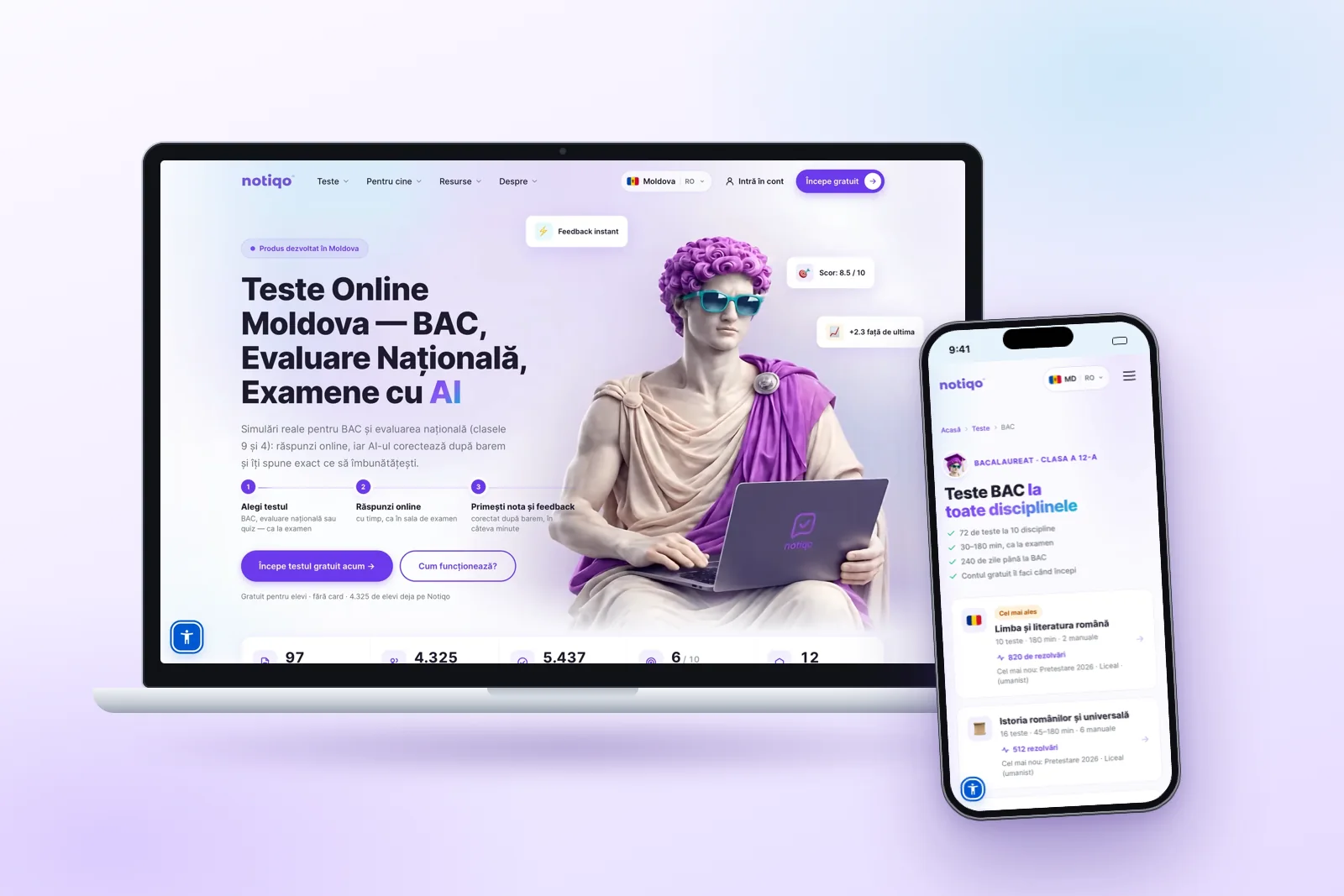
Notiqo, our own product, went through all these steps: concept, design and development.


What you get. Four deliverables you can use with any development team.
What the product must do, by role, split into “now” and “later”, so the first version stays small and useful.
Contains
- Roles and needs
- Prioritization
- Acceptance criteria
The steps each user takes from the first page to the result, with decisions and edge cases, drawn before the screens.
Contains
- Flow maps
- Edge cases
- Required integrations
The main screens, linked together, which you can test with real users before development.
Contains
- Key screens
- User testing
- Iterations
Stages, an estimate and the risks, so you know what you get, in which order and for what budget.
Contains
- Stages
- Estimate
- Risks
What we decide together. Before the first line of code.
-
A prototype before code
You test the main flows with real users before investing in development.
-
Who uses the product
The roles and what each one may see.
-
What goes into the first version
Only what the product needs to do its job.
-
What matters most
We prioritize by value to users and by effort.
-
Which systems we connect
We check integrations early, so there are no surprises.
-
A plan in stages
Each stage with its deliverable and approval.
-
An estimate by stage
You know what each stage costs before it starts.
Own product · Education
Notiqo: a product we defined, designed and built.
Notiqo is our own product for grading tests in schools, from concept to design and development. It has separate flows for students, teachers and administrators, a clear rule for the AI (the AI suggests, the teacher decides) and a library of criteria by subject and grade.
- Type
- MakeIT’s own product
- MakeIT’s role
- Own product: concept, design and development
- Roles
- Students, teachers, administrators
Products built from scratch. Platforms and stores thought through and built from the first version.
You always know where your project stands. Five stages, each ending in a result you see and approve.
01 / 05
Definition
Together we define what the product has to do, who it is for and what goes into the first version.
You getRequirements, flows and an estimateApproved by you
02 / 05
Design
We draw the screens and link them into a prototype you can try before a single line of code is written.
You getA clickable prototype and final screensApproved by you


03 / 05
Development
We build in short stages. Each version goes to a test environment, where you can see and try it.
You getWorking versions in a test environmentApproved by you
04 / 05
Launch
We launch, move the data over from the old system, train your team and hand over access.
You getA live product, training and access handed overApproved by you
- Tests
- Migration
- Training
- Access


05 / 05
Ongoing development
After launch we monitor how the product runs and improve it, based on priorities we set together.
You getMonitoring and prioritized improvements
Questions about product definition. Cost, deliverables, who takes part and what comes next.
How much does product definition cost?
It depends on how many roles and flows the product has and how much we test the prototype. We estimate it separately from development, after the first call. Here is what changes the effort:
What changes the effort
Relative effort: small · A well-defined first version
- Number of roles. Each type of user has its own needs and flows.
- Main flows. More flows mean more screens to design and test.
- Integrations to check. Existing systems are analysed before the estimate.
- User testing. How many testing rounds we run with the prototype.
- A new market. A product for an unfamiliar market needs more research.
Illustrative, no prices. You get the real estimate in writing after the first call.
What exactly do we get?
Prioritized requirements, flows, a clickable prototype and an implementation plan with a stage-by-stage estimate.
Can we use the deliverables with another team?
They are designed to be usable by any development team. The rights to them are set in the contract.
Who takes part on our side?
Usually someone who makes decisions about the product and a few future users, for interviews and prototype testing.
What happens after the definition?
You decide on the basis of facts: we build the first version together, you postpone, or you drop the idea.
Let’s talk about your idea. Describe it in a few lines, even if it’s still fuzzy; we’ll come back with questions and next steps.
What happens next
- You send the requestA few lines about what you want to build.
- We get in touchWe clarify the details and book the call.
- The first callGoal, feasibility, next step.
Prefer to reach us directly?
Thank you! We’ve received your request.
We’ll get in touch to clarify the details and book the first call.
Local demo: the request was not sent anywhere.